
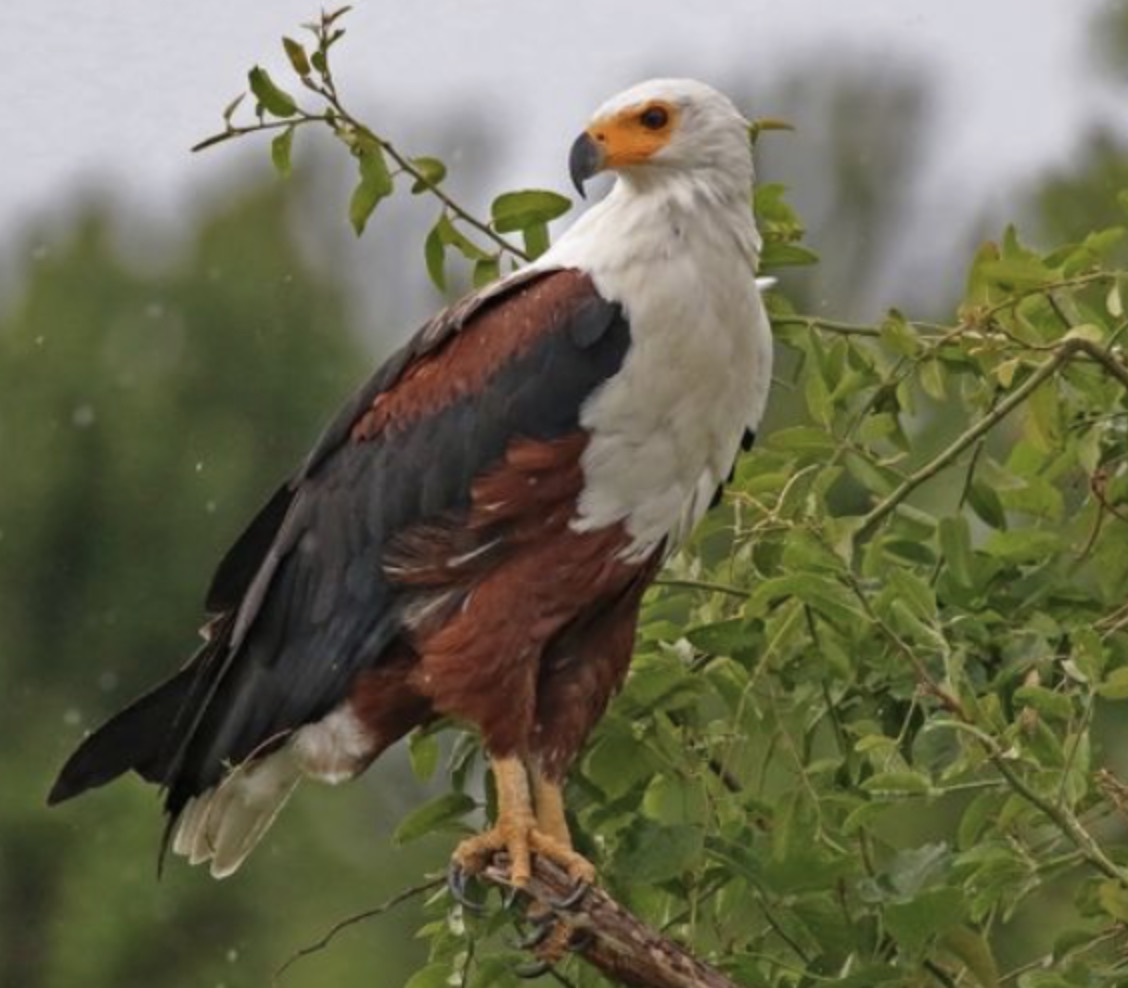
The unmistakable African Raptor!
At the time of writing, we are 6 months in to the Initial Covid-19 lockdown 2020, and we have been locked in South Africa. With international tourism down to almost nothing, we have had some time to re-connect the joys of South Africa.
Close to our home, there is a pair of African Fish Eagles. They have a distinctive cry and flashes of black and white are visible as they circle lazily above the water of a nearby estuary. So what better time to introduce you all to this splendid bird of prey?
Where are they found?
South of the Sahara is where they are found, usually where there are large bodies of water and abundant food (fish). So anywhere near ponds, estuaries, lakes, rivers, streams, coastal waters or wetlands. If they are near a lake, they will need 1 square mile of water to be able to get enough food. If they live near a small river, they will need 15 miles of river for enough food. They make their nests in large, strong trees. The nests are re-used and renovated every year. Often they will have 2 or more nests and rotate the usage. These nests are large and can be up to 2 metres wide and 1.2 metres deep and are made of sticks and wood. The nests can be pretty heavy, thus the need for large strong trees.
What do they look like?
They are fairly large, with the females being bigger than the males:
Female: 3.2 – 3.6 kgs. 2.4 m wingspan
Male: 2 – 2.5 kgs. 2 m wingspan
Colouring: The body is a beautiful chestnut brown, the powerful wings are black, with the head, tail and breast being a startling contrast in white. The face is yellow and featherless, with brown eyes, and the hooked beak is yellow with a black tip. The feet are rough, with short sharp “spiricules”, and large talons, which aid the catching of their slippery, fishy prey.
What sound do they make?
They have the most distinctive bird call of Africa and have been said to be the very spirit or essence of Africa. They toss their heads backwards and then let out their distinctive cry the female more shrill than the male. During mating season, you can often hear beautiful duet-calls between the 2 birds: call and answer, call and answer. This is part of the bonding between the pair.
What do they do all day?
The birds are usually seen perched high up in their tree, their distinct colours obvious agains the contrast of the leaves. They seem to spend most of the time here. They tend to hunt in the morning, and then from around 10am or so, will spend the rest of the day up in their lofty perches with a glorious view of the water surrounding them.
Breeding season
The female bird is the primary care-giver and will lay 1 – 3 eggs in 3 day intervals. The eggs are white with a few reddish speckles. There is a 42 – 45 day incubation period, where usually the female can be seen keeping the eggs warm, and occasionally turning them. However when she goes to hunt, clean her leaves or stretch her powerful wings, the male will take his turn on the nest. Usually 2 – 3 chicks will hatch successfully and the fledgling period is 70-75 days. Life expectancy in the wild is 12 – 24 years, but in captivity they have been known to live as long as 40 years.
Hunting
Their food is mostly fish (90%) but they are known to eat small birds, even chickens, and the occasional flamingo! They are happy to share their catch with their mate! They are extremely efficient at hunting and do not submerge themselves to catch beneath the water. They snatch fish from the surface of the water in a stunning display. They usually catch live prey, but will eat already dead fish, and are also known to steal food from other birds!
Indicator species
If you see or hear African Fish Eagles nearby, you can be sure that the surrounding environment is relatively healthy. They need a lot of fish to survive, and several tall and healthy trees. On the other hand, if they begin to disappear or die off, it tends to indicate a problem with the environment. This could be over-fishing, pollution, contamination, drought or over use of the lakes / water.
If you have never had the pleasure of seeing or hearing this magnificent bird, then come on over to the rivers and lakes of Sub Saharan Africa. There is nothing like it: sitting in a boat, on the Nile River in Ethiopia, Sudan or Uganda, and hearing their heart-catching cry as they fly over the water. If you wait long enough, you will hear the answering call for the mate, from high up in a strong, healthy tree.
You will feel your heart respond to this bird and this continent.