
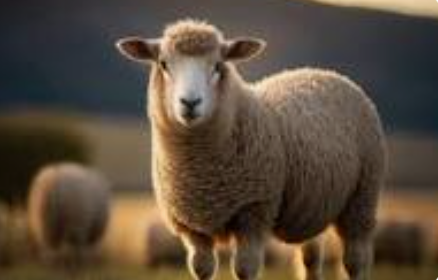
A time to eat meat
We all have our favorite holidays and annual events in our lives. Here in Egypt, people have 2 religious / public holidays every year:
The 2 Eids (religious holidays)
These 2 Eid festivals are a time of celebration and feasting and have religious meaning.
The lesser Eid (shorter, smaller) is the Eid il Fitr, which is the one day celebration of the end of the Ramadan month of fasting.
The second Eid is the one we will be looking at here. It has many names:
• Eid al Adha
• Feast of Sacrifice
• the Major Festival
• The Greater Eid
• Eid il Kabir
The greater Eid
According to Islamic tradition, this Eid honours the willingness of Abraham to sacrifice his son (Ishmael) as an act of submission and obedience to Allah. But Allah intervened and provided a lamb instead. So it is a time to remember the value of self-denial that Abraham modelled with his willingness to sacrifice his son.
When is this Eid?
It is a 4 day public holiday, and is on the 10th day of the Dhu al-hijab (in the Islamic Calendar). If we use the Gregorian calendar, the actual date will vary by 11 days (earlier) every year. But in 2012-2014 the Greater Eid was in the month of October.
The timing is linked to the annular Haj, and the first day of Eid coincides with the final day of the Haj, when the pilgrims descend from Mount Arafat (the hill east of Mecca).
How is it celebrated?
On the first day, it begins with a special version of the daily dawn prayer. People will usually wear their best clothes, or their new Eid clothes for this day. At the end of the prayers, there will be the customary embracing and greetings of the Eid:
Eid Mubarak (blessings of Eid).
And then the fun begins. Around 6 or 7am (depending on the time of the sunrise) the sacrificing will begin. All those who can afford an animal, will have bought one prior to this day. It could be a camel, a bull or a sheep. You will have see these sheep being transported home in trucks, cars, wheel barrows and even on boats! In many markets special stalls are made to house these animals. They are sold to people 2 weeks prior to the Eid. Some will get the slaughtering done by a butcher, but in many homes it is done (literally) on the doorstep of their houses.
For many of us (and some Egyptian women I know) the idea of watching or getting involved with the slaughtering is not something we would call fun. However in many villages, the children and men are usually very animated about the slaughtering as it is a special annual event that involves the whole family.
The most experienced (and fit) man will be allocated the task of the master stroke, and then the cleaning and cutting will be done. The children love to put their hands in the blood and make hand prints or patterns on the walls of the houses!
The more experienced women will then do the breakfast of the day: liver and kidneys, cooked with onions and spices, to be eaten with delicious bread.
The cleaning continues until the meat is divided up and ready to be distributed.
Who eats the meat?
The idea of Eid is that EVERYONE gets to eat meat that day! So according to Islamic tradition, the meat must be divided into 3 parts:
1 = is for you!
2 = is for you relatives/friends/neighbours
3 = is for the poor in your community
In some countries, you can donate money to various organisations and they will buy and distribute meat to the poor on your behalf. So at the main meal of the day, the goal is that every household in the country is eating meat with friends and relatives.
Going out after lunch
After a huge and satisfying meal (MEAT, rice, bread, salads) people will then go out and visit friends and relatives. The giving of gifts sometimes happens, and everyone wears their newest and best clothing and eats special Eid biscuits, called Kahk and drinks copious cups of tea. The children rush around with glee as the first day of the Eid draws to a close.
The feasting, meat eating, sharing, going out, visiting and wearing of fabulous clothes continues until all 4 days draw to a close.
School begins again and off to work the people go, but looking forward to the Greater Eid that will come about following year.